

Transformational Change and 3rd-Way People
Guest post written by Wendy M. Purcell, PhD FRSA, Harvard T.H. Chan School of Public Health
The ISCN Conference 2022 opened with the session ‘Sustainability: A Manifesto for Change and ‘Third-way’ People’ that brought together authors from the forthcoming Bloomsbury Handbook of Sustainability in Higher Education (Editors: Wendy M. Purcell & Janet Haddock-Fraser; due out early 2023). Julie Newman (Massachusetts Institute of Technology, USA) and Shana Weber (Princeton University, USA), authors of Chapter 13 ‘Accelerating Response to a Changing Climate: Solutions Across Scales’, Julio Lumbreras (Universidad Politécnica de Madrid, Spain) author of Chapter 15 ‘University-City Partnerships for Sustainable Urban Transformations’ (co-authored with Jaime Moreno-Serna, Guillermo Palau, Jordi Peris, Valentia Oquendo, Teresa Sánchez-Chaparro, and Carlos Mataix), and Dave Gorman (The University of Edinburgh, UK), author of Chapter 16 ‘Transformational Change: Lessons from the University of Edinburgh (co-authored with Michelle Brown) and I (author of Chapter 14 ‘University Leadership and Governance Enabling Sustainability and the SDGs’) each shared highlights from our chapters. The book concludes with a ten-point manifesto for change in higher education fueled by sustainability and engagement with the SDGs.
The session then launched a dialogue with attendees around the topic of ‘third-way’ people, i.e., those able to traverse the academic and professional domains of a university or college to advance pan-institutional sustainability projects. It is worth noting that Julie, Shana, and Dave are each based in a university ‘green office’, while Julio works closely as a member of a cross-university interdisciplinary institute charged with addressing the SDGs. They each shared examples of ‘boundary spanning’ projects, revealing how they navigated the inherent tensions of discipline-based scholarly communities, professional domain groupings, and student subject communities. In this way they are able to advance sustainability projects that are multi-faceted, unbounded, and emergent.
As the work of sustainability in higher education extends beyond a focus on energy and estates into institutional strategy and academic mission, so too then university green offices are assuming new responsibilities. They are working horizontally across functions of the institution, vertically within the hierarchy of institutional leaders and subject leaders, engaging with stakeholder groups internally and externally, and extending their reach locally and globally. They are networked leaders, collaborating across these different boundaries to advance sustainability. To address the complexities inherent in the pursuit of sustainability within higher education and through the academy into society at large, demands leaders able to connect people to practice, translate strategy to action, and create value through delivery of the mission and brand.
The ISCN wants to keep this conversation going, and is furthering the webinar series featuring authors from the Bloomsbury Handbook of Sustainability in Higher Education.
Webinar 2: https://international-sustainable-campus-network.org/student-leadership-community-entrepreneurship-for-sustainability/
Webinar 3: https://international-sustainable-campus-network.org/advancing-sustainability-in-fragile-contexts/
Fourth webinar details to come
Photo by Possessed Photography on Unsplash


Global climate summit launches worldwide education coalition
ISCN is proud to be a partner in a newly formed worldwide education coalition in support of the Right Here, Right Now Global Climate Summit.
The December 1–4 summit is co-hosted by United Nations Human Rights and the University of Colorado Boulder and will take place virtually and in person on the university’s campus in Boulder.
Learners and educators of all ages, from primary school classrooms to university research labs, are invited to engage in this landmark event through the new Right Here, Right Now Education Coalition. Participating institutions and individuals will receive free access to a coalition toolkit—including information on how to host watch parties and how to spread the word about the connections between human rights and climate change, and why that connection matters to everyone.
“Climate change is already having significant impacts around the world, and marginalized communities often bear the brunt of the devastating impacts of these events. Through the new Right Here, Right Now Education Coalition, we aim to galvanize people around the world to focus on addressing the urgent issue of climate change through a human rights lens.”
—Heidi VanGenderen, CU Boulder chief sustainability officer, co-chair of the summit’s steering committee
Beyond ISCN, Right Here, Right Now Education Coalition partners include the Association of American Universities (AAU), American Council on Education (ACE), Association for the Advancement of Sustainability in Higher Education (AASHE), Association of Public & Land Grant Universities, Global Council for Science and the Environment, Second Nature and the University Climate Change Coalition (UC3). Through this coalition, the summit is already connecting with thousands of educational institutions and related entities around the world.
Departments, classes, clubs and people affiliated with educational institutions are encouraged to join the summit by watching events locally from their computers and phones—either live or through recordings.
Summit organizers are developing climate education and summit-specific resources for educators and will share them with coalition members as they become available.
“The summit organizers want to thank our amazing partners,” said Heidi VanGenderen, CU Boulder’s first chief sustainability officer and co-chair of the summit’s steering committee. “To solve the world’s climate crisis, young people from all nations need the chance to learn about how climate change is affecting their own communities. These organizations are helping to share those opportunities with the next generation of global leaders.”
The summit will bring together thought leaders, youth activists, and scientific, political, educational, cultural and industry experts from around the world for keynote addresses and panels exploring how climate change impacts fundamental rights, including the right to food, safe water, housing and health.
The event will include three keynote speakers, including former president of Ireland and climate justice advocate Mary Robinson, Indigenous rights advocate Sheila Watt-Cloutier and human rights advocate Kumi Naidoo, in addition to more than 30 other panelists and speakers from Colombia, Cameroon, Trinidad and beyond.
Learn more about and join this global network of students and educations
Freie Universität Berlin publish Sustainability Report 2022
The third Sustainability Report summarizes the status of achievements in the area of sustainability and climate protection at Freie Universität Berlin. The university is presenting the report for the third time since 2018. The publication focuses in particular on the years 2020 and 2021 and reviews activities in the fields of governance, teaching and research, campus, dialogue, and networks. In addition, the report provides an outlook on the university's future sustainability priorities.
In 2020 and 2021, Freie Universität reached important milestones: in September 2021, it was validated by an external environmental auditor according to the European environmental management system EMAS. EMAS (Eco-Management and Audit Scheme) is the European Union's environmental management certification and is one of the most demanding management standards worldwide. Freie Universität is one of a small group of currently 24 EMAS-validated universities in Germany. It thus has an essential prerequisite for developing its environmental management transparently and continuously. The validation was only possible through the intensive participation of large parts of the university.
Another milestone in the past two years was the launch of a new ideas and innovation management program aimed at implementing the commitments defined in the 2019 Climate Emergency Declaration. It had a promising start with the first call for proposals - FUturist - in November 2021 and 28 proposals submitted.
"We now have the opportunity here for new initiatives, narratives and communities to emerge, which in the best case will inspire each other and spark ideas for new living labs," says Andreas Wanke, head of the Sustainability and Energy Unit.
A sustainability-oriented business travel policy with CO2 pricing and a dedicated climate protection budget was also launched. The 2020 and 2021 mission statement for studying and teaching highlights sustainability as one of eight guiding dimensions. The Blooming Campus initiative has brought about changes in the university's green space management. Meadows and green spaces on campus have been mowed significantly less since 2020. Mowing has ceased during the early bloom phase in April. Species diversity on campus has increased significantly since then.
Freie Universität began systematically implementing climate protection more than 20 years ago. With a bundle of different measures and incentives, the university has succeeded in reducing campus-related electricity and heat consumption by a total of almost 27 percent between 2001 and 2019. Adjusted for the increase in space, the reduction is as much as 29 percent. In the pandemic years of 2020 and 2021, energy use decreased by another 4.7 percent (2021), for an overall decrease of 30 percent since 2001. Adjusted for area, it is even a reduction of 34 percent.
Andreas Wanke notes: "The decline in energy consumption and emissions due to the increased use of home offices during the pandemic years fell short of expectations. This was due in particular to the fact that many heating systems, ventilation systems and devices had to remain in operation despite largely virtual semester operation. In addition, the increased need for ventilation during the pandemic also resulted in increased energy consumption."
In 2019, Freie Universität became the first German university to declare a climate emergency, with a commitment to consider climate impacts in all decisions and planning and to become climate neutral by 2025. For the next few years, the focus will be on measures to implement the climate emergency declaration. These include, for example, the addition of photovoltaic systems and the further reduction of energy consumption through energy efficiency measures. These processes will decisively shape sustainability management at Freie Universität over the next three years.

Sustainability Reporting Survey – Invitation to participate
Deadline extended to December 14, 2022.
You are invited and encouraged to participate in a survey on Sustainability Reporting at Higher Education Institutions. The survey will gain an understanding of existing sustainability reporting practices in the global higher education sector.
Your response is valuable and will help us to identify current practices for reporting sustainability, the associated opportunities and challenges, and will form the basis for policy recommendations.
The survey was created by experts from an international group of higher education institutions with the support of ISCN.
The deadline for completion is October 31, 2022 December 14, 2022 and the survey will take around 45 minutes to complete. It is possible to complete the survey in multiple sessions if the same browser is used.
Your participation is greatly appreciated in compiling a comprehensive picture of sustainability around the world. Anonymised results will be shared in a report in 2023.
Contact [email protected] if you have any questions about the survey.
Photo by Jason Goodman on Unsplash
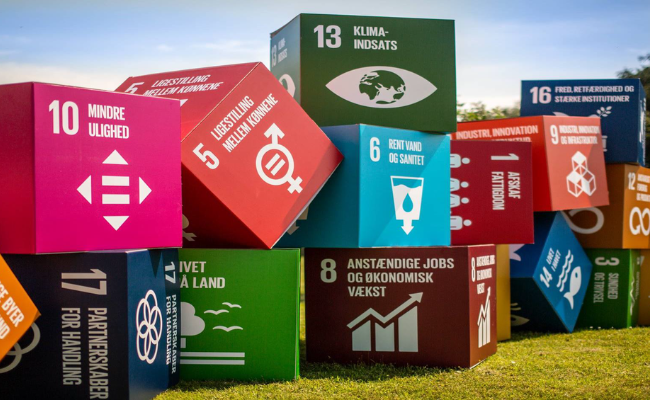
University of Southern Denmark 2021 Sustainability Report released
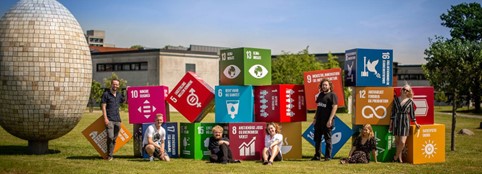
Knowledge for a sustainable future
Universities have a critical role to play in providing answers to grand societal challenges. In our time, one of the greatest challenges facing the future of our planet is sustainable development. Universities generate new knowledge and innovations that provide solutions to the interconnected social, economic and environmental challenges captured in the SDGs. This report is a snapshot of what we did in 2021 to advance sustainability across the University of Southern Denmark.
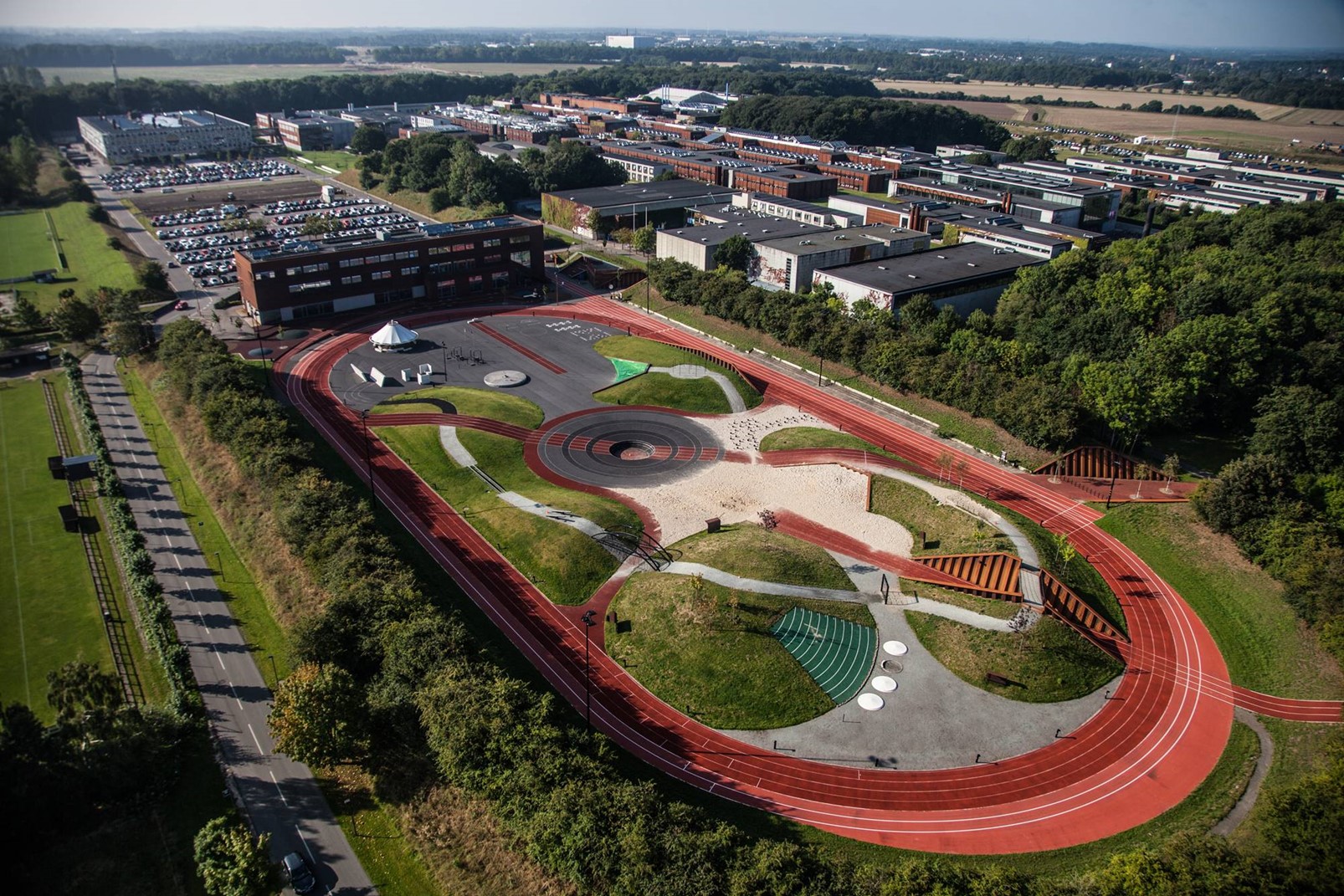
Research and innovation
The report shows that researchers at SDU are occupied with sustainability and are engaged in a wide variety of sustainability-related research activities. The examples range from green aviation fuel to inequality in healthcare and sustainable markets. The report also shows that the activities are happening globally and locally in collaboration with other universities, companies and public institutions.
On average, between 2019 and 2020, 58% of research funding was used for research related to sustainability. This corresponds to almost DKK 400 million. According to Elsevier SDG classification queries in the database Scopus1, the total number of SDG-related publications by SDU researchers in any SDG in 2021 was 1,906. 1,309 of these were scholarly SDG-related publications (articles, conference papers and book chapters).
From 2011-2020, researchers from SDU published around 25,000 co-authored publications. 15% of these were with non-SDU researchers from the Global South. During that period, there was a yearly increase in the number of co-authored publications and the proportion published in cooperation with non-SDU researchers from the Global South. In 2020, this share was 20%.
Finding effective solutions to the climate challenges facing society requires interdisciplinary research. SDU holds a strong position within this area, and we want to bring this even more into play. In 2022, we will launch SDU Climate Cluster (SCC). SCC will unite research environments across disciplines and faculties on a joint, mission-driven research thematic: “Climate”. With a broad interdisciplinary approach to climate research, SCC will set a framework that provides optimal conditions for cutting-edge, excellent and interdisciplinary research, education and communication within the climate area and the sustainable green transition of society.
Teaching and learning
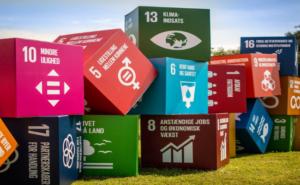
Of the 17 SDGs, SDG 4 is Quality Education, which discusses the need to ensure inclusive and equitable quality education for all without discrimination. SDG 4 has 10 targets concerning different aspects of education. One of the targets focuses on ensuring that all learners acquire the knowledge and skills needed to promote sustainable development. In the autumn semester of 2020, as a part of a pilot project around 1,000 students across SDU completed the introductory course on sustainability. In 2021, the course became part of all programmes at SDU, and all new students on the bachelor programmes must now complete the course.
The report sheds light on the range of subjects and courses as well as co- and extracurricular offers relevant to sustainability. 995 courses and subjects offered were related to sustainability. This corresponds to 23% of all courses and subjects. 89 bachelor, master’s and engineering programmes are related to the green transition. This means that the programmes contain topics such as energy production and efficiency, agriculture and food production, transport, environment and circular economy, nature and biodiversity or sustainable behaviour and societal consequences.
In 2022, we will continue to develop and make visible our curricular, extra- and co-curricular offers to students who want to improve their skills in relation to sustainability. Another area of focus will be rethinking our guidance to students. We are now standing on the threshold of a new transition in the labour market: the sustainable transition. At the same time, we are experiencing that more students want to contribute to a sustainable future through participation in communities. The task here will be to support students and see to it that their individual career trajectory is connected to the societal and global trajectory, and that “I too” through my education, work and career can contribute to the actual creation of a sustainable future.
Operations
SDU is also committed to embedding sustainability in all our campus operations to conserve resources, reduce pollution, reduce carbon emissions and support positive behaviour on sustainable issues. We also want to ensure that SDU is a diverse employer with innovative and creative research environments and an inclusive and healthy working environment.
The also shed light on selected areas in our efforts to make our campuses more sustainable and make SDU an inclusive and diverse workplace characterised by a healthy working environment. As can be seen about one in five employees experience challenges in relation to their work-life balance. When a similar survey was conducted three years ago in 2018, this share was also 21%.
In relation to gender equality, it should be noted that we are seeing a five per cent increase in the proportion of female senior academic staff compared to previous years. The female proportion of senior academics is now 28%. In comparison, the female proportion among assistant professors and associate professors is about 45%. 37% of all managers in SDU are women. If we zoom in on the two senior management levels (executive board members, department heads and directors), the proportion of women is 33%.
With the Board’s adoption of a climate plan for SDU in December 2021, the focus in 2022 and onwards will be on intensifying the work of reducing greenhouse gas emissions from the University. The goals here will be to reduce emissions from buildings, operations and transport as well as strengthen the circular resource economy at SDU. As part of the plan, SDU has set a goal of reducing greenhouse gas emissions by 57% in 2030 compared to 2018.
2022 Award winners: ULiège
This series features our 2022 Award winners. This month, we hear from the Université de Liège.
What does it mean to you to win the award?
This international recognition generates a general feeling of pride at the University of Liege! It strengthens the energy of the Green Office team and motivates it to share the program in order to increase the positive impact. The publicity generated around the program makes the work of the Green Office more visible inside and outside the University. This better knowledge by internal and external actors at ULiège increases the potential for partnerships around the various activities integrated into the program (conferences, construction of challenges, etc.).
What’s next for your project: “Student commitment program to reduce individual carbon footprint”?
Two new goals have been already set by the team.
The first one is dedicated to broaden the outreach of the replication of the program. We aim to spread it from the French-speaking part of Belgium to the Dutch-speaking part of our country. This autumn we will organize the twinning of challenges for climate and biodiversity between our Higher Education institutions in these two regions.
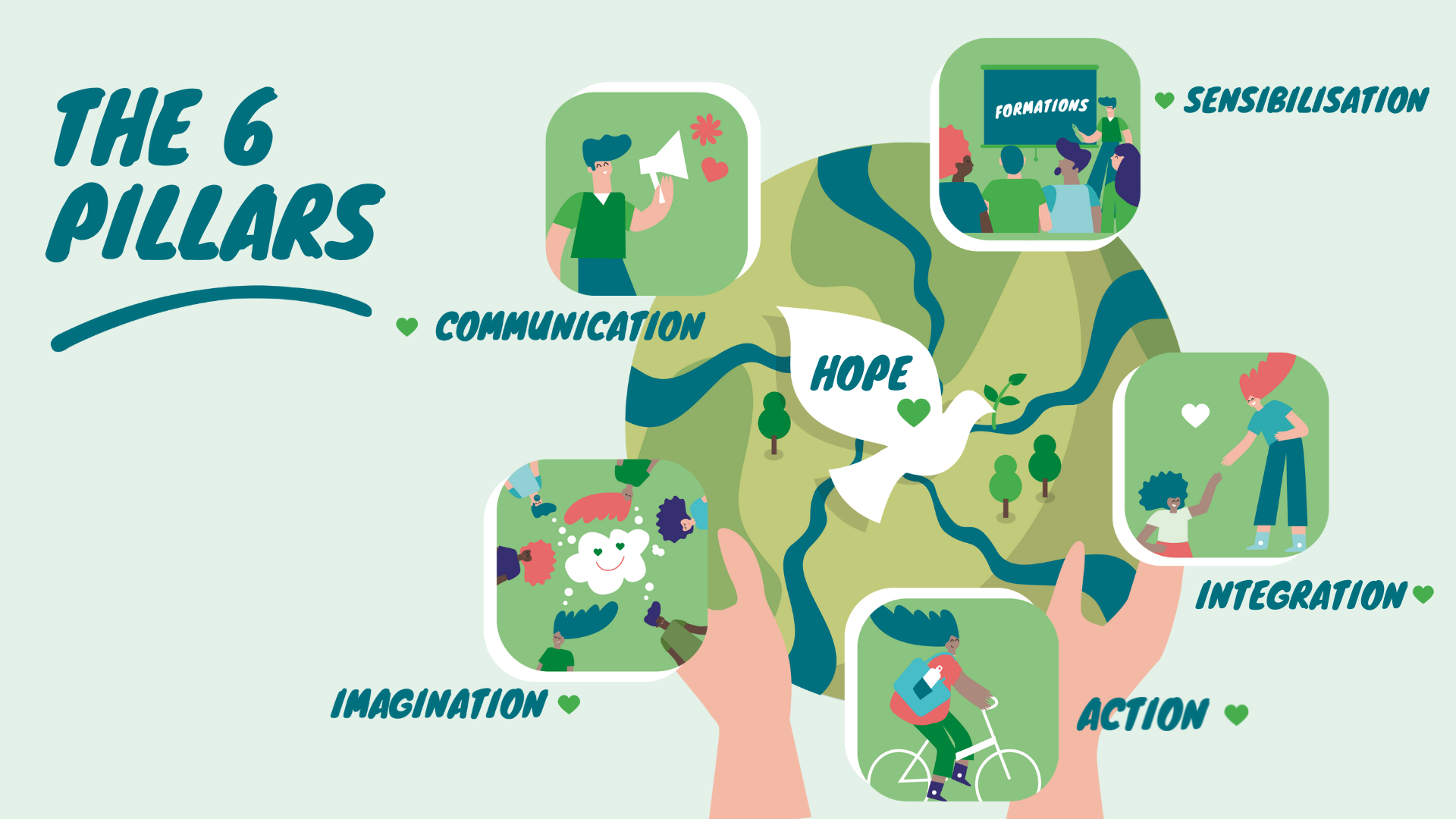
The second one consists of enriching the content of the program by adding two new pillars to the strategy. The “Imagination Pillar” will invite our students to dream the sustainable territory they want to live in by 2030. The “Hope Pillar” consists in sharing inspiring positive initiatives to give our students the will to engage themselves to build together a sustainable world.
Do you have any advice for those working on “Cultural Change for Sustainability”?
Yes, we have some advice to motivate the students to engage themselves to act for cultural change for sustainability!
For example,
- build a very motivated student team with multidisciplinary profiles supported by a staff coordinator
- propose an attractive pioneer program which stimulates the interest
- ensure the scientific validation of the program to avoid “the false good ideas”
- include a large variety of stakeholders to build together the challenges (for example the Professors can build a challenge with their students within the framework of their courses)
- gather the engaged students into a single strong community on a collaborative platform
- give visibility to the impacts generated by the program’s actions
- share the program and organize simultaneous actions on different campuses to generate greater positive impacts and enthusiastic feelings
- offer fun through contests and festivities
- massively communicate to the students about the activities and the challenges with different tools: videos, debates with charismatic personalities, and so on.
2022 Award winners: Strathclyde
This series features our 2022 Award winners. This month, we hear from the University of Strathclyde.
What does it mean to you to win the award?
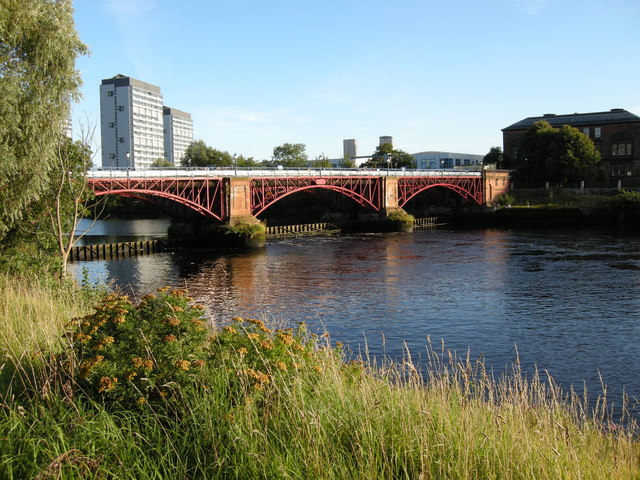
It is helpful and rewarding to have our work recognised by ISCN, our international peers. The vision that we created and shared with a host of stakeholders backed up by the whole systems approach and the technical work we have led has helped build a strong base for this climate-neutral vision to be delivered. It is exciting work we are leading and there is much more to do but this sort of recognition by ISCN is both valuable and reassuring that we are on the right path. For instance, reimagining the River Clyde as a heat source and creating a climate corridor along High Street, the original birthplace of Glasgow is innovative and inspirational. We see opportunity for our students and research and teaching staff to become more involved as we move forward in delivering the vision and helping put people at the centre of climate action and social inclusion.
What’s next for your project: “Climate Neutral Glasgow City Innovation District”?
Phase 2 of the project kicked off with a workshop held in early August. More detailed technical work is now underway with more to follow. We have recruited members for a Task Group to help steer the project and to signal positive intent to the market that there is a coherent and committed group leading this work. All of this work will continue to be coordinated at this stage by the University and the governance will be via Sustainable Glasgow Board, chaired by the leader of the Council, Susan Aitken.
Do you have any advice for those working on “Partnerships for Progress”?
I would encourage a strong and clear vision, and a strong and determined set of partners and a network that can come together with a shared purpose. In this case, a climate-neutral district that meets a range of societal needs and which will directly benefit people. Try and bring the vision to life and make it accessible for those involved. Make it as real as possible; align it with policy; and make it data-led and evidential of course.
Photo: Pipe Bridge and Tidal Weir, River Clyde cc-by-sa/2.0 - © Richard Sutcliffe - geograph.org.uk/p/4795538
From Culture To Sustainable Practices webinar recap
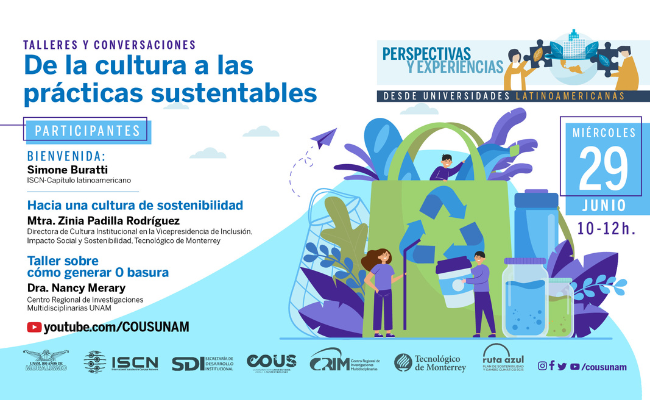
On June 29, 2022, the Universidad Nacional Autonoma de Mexico (UNAM) and the Tecnologico de Monterrey joined forces for the first workshop organized and promoted by the ISCN Latin American Chapter: “From Culture to Practice of Sustainability. Practices and experiences from Latin American Universities”.
Zinia Padilla of Tecnologico de Monterrey presented a report on the first year of the Culture component of the Ruta Azul. Plan de Cambio Climatico 2025 (2025 Sustainability And Climate Change Plan), an integrated plan built on five key components: Culture of Sustainability, Mitigation, Adaptation, Education, Research, and Outreach. Zinia outlined the challenges to go beyond a general familiarization of the public but rather to insert new knowledge and break paradigms through education, tutoring, and training.
One of our biggest challenges is to provide change management tools, so that the initiatives and activities that arise are in collaboration with the other axes of the project.
Nancy Merary from Campus Morelos of UNAM introduced the Programa Manejo Integral de Residuos Solidos Universitarios con Enfoque Basura Cero (Zero Waste Management Program) as a specific commitment of the university to transform public practices, improve management systems, reduce waste impact, and retrieve subproducts for a more effective recycling chain.
We want to be an example of commitment to the environment. Likewise, we are interested in dignifying and modernizing the management system of campus waste. Unfortunately, the latter is denigrating and precarious for the workers in many other university spaces since it does not grant an actual management of our waste.
The full session recording in Spanish is available on the COUS UNAM YouTube channel:


Embedding Climate Change Education within HEIs
Session 6. Embedding Climate Change Education within HEIs
Friday, June 10th, 15:00 – 16:30 British Summer Time (UTC+1)
Description
Over the last decade Climate Change Education (CCE) at universities has increased (Filho et al. 2021; Thew et al., (2021). There is a range of published examples/case studies illustrating how CCE is embedded within certain courses/disciplines (Madden et al., 2018; Molthan-Hill et al., 2019; Kinakh, 2021). There are still challenges in addressing climate change within the teaching practices at universities.
This session seeks to further the debate on:
- What are the attitudes of teaching staff to CEE, their knowledge of climate change, and inclusion of ‘climate change’ topics in their teaching?
- What strategies are more effective in educating modern-day students about climate change (e.g., how educators should teach and how undergraduate/postgraduate students might be engaged to learn about climate change and actions that can be taken to mitigate and adapt to climate change)?
- To assist in embedding CEE in curricula, can the existing strategies, initiatives, case studies, etc. be replicated in universities across the globe, and can challenges to implement CCE be addressed/resolved promptly?
Professor Petra Molthan-Hill PhD, MBA, MDiv, PFHEA is Co-Chair UN PRME Working Group on Climate Change & the Environment and a Professor of Sustainable Management and Education for Sustainable Development at Nottingham Business School, Nottingham Trent University. Professor Dave Reay FRSGS is Executive Director of Edinburgh Climate Change Institute , Policy Director of ClimateXChange and Chair in Carbon Management & Education, School of GeoSciences, The University of Edinburgh.
Session organiser
- Dr. Vitalia Kinakh, The University of Manchester
Presenters
- Professor Petra Molthan-Hill, Nottingham Trent University
- Professor Dave Reay, The University of Edinburgh
Slides
Vitalia Kinakh
Petra Molthan-Hill
Relevant Links
Mainstreaming Climate Change Education in UK Higher Education Institutions
EduCCate Global
QAA Education for Sustainable Development
Carbon Literacy Action Day
En-ROADS Simulator
Climate Literacy & Action Training CLT-ECOS
Session recording
Other sessions
Radical Reforms for the Campus of the Future
Visualizing Societal Impact: Research and Education Dashboards of the Sustainable Development Goals
How to Report the Transformation in Higher Education for Global Sustainability

Accelerating Sustainability in Higher Education: Perspectives and Experiences from Latin American Universities
Session 4. Accelerating Sustainability in Higher Education: Perspectives and Experiences from Latin American Universities
Wednesday, June 8th, 11:00 – 13:00 Central Daylight Time (UTC-5)
Description
The ISCN-LATAM Steering Committee members will outline the unique challenges and opportunities universities are facing in advancing sustainability and share work to date on the development of the ISCN-LATAM Chapter. Each member will showcase sustainability initiatives at their respective universities and discuss opportunities for further collaboration. The session will help to generate ideas for the ISCN-LATAM Chapter work for the year ahead.
Session organisers
- ISCN-Latin American Chapter Steering Committee
Presenters
- Denise Crocce, Associate Professor, Universidade de São Paulo, Brasil
- Emilio Latorre, Director Oficina de Campus Sostenible, Fundación Universitaria Católica Lumen Gentium, Cali, Colombia
- Héctor Miranda, Gerente General de Regenerativa, Perú
- José Kanematsu Hazama, Dirección de Infraestructura, Pontificia Universidad Católica de Perú
- Leticia Merino, Coordinadora de la Coordinación para la Sustentabilidad e Investigadora del Instituto de Investigaciones Sociales, Universidad Nacional Autónoma de México
- Melissa Brown Goodall, Senior Director, Environmental Innovation Initiative, University of Pennsylvania
- Simone Buratti, ISCN-LATAM Chapter Coordinator
Slides
01-Latin America Challenges and Opportunities
02-A Network Under Construction
03-Opportunities for ISCN-LATAM
04-Denise Crocce ISCN 2022 USP
05-Jose Kanematsu PUCP
06-Integrated Plan for Sustainability UNAM
07-Creating Local Networks of Sustainability RUCAS Cali Colombia
Relevant Links
Primer Campus Universitario Sostenible del Perú Video
Session recording
Other sessions
Radical Reforms for the Campus of the Future
Visualizing Societal Impact: Research and Education Dashboards of the Sustainable Development Goals
How to Report the Transformation in Higher Education for Global Sustainability
Embedding Climate Change Education within HEIs