

How to Report the Transformation in Higher Education for Global Sustainability
Session 5. How to Report the Transformation in Higher Education for Global Sustainability
Thursday, June 9th, 15:00 – 17:00 Central European Time (UTC+2)
Description
The pressure on communicating both internally and externally about universities’ contributions to sustainable development has increased. This session will include four universities presenting how they have tackled sustainability reporting challenges and another presentation describing the survey on sustainability reporting that the Working Group will conduct during 2022.
This will be followed by interactive breakout rooms for more detailed discussions on specific issues related to sustainability reporting. The aim is to create smaller benchmarking groups on specific topics where the participants can continue sharing experiences during the year.
Session organisers
- Kristina von Oelreich, Sustainability Manager at KTH Royal Institute of Technology
- ISCN Sustainable Reporting Workgroup
Presenters
- Ana Carla Madeira, Head of the Sustainability Committee, University of Porto
- Andreas Dionyssiou, Coordinator, Environmental Policy Office, Cyprus University of Technology
- Anna Berglund, Sustainability Coordinator at KTH Royal Institute of Technology
- Omar Kassab, ETH Sustainability, Office of the President, ETH Zürich
- Sonja Moghaddari, Vice Presidency for Responsible Transformation EPFL
- Jacopo Grazioli, Sustainability project manager/education and Atmospheric scientist, EPFL
- Siroune Marie-Noëlle Der Sarkissian, Senior Project Leader – Sustainability / Supply, EPFL
- Paul Cross, Expert, Institutional Research, ETH Zürich
- Tobias Michl, Sustainability manager at the Technical University of Munich
Slides
Kristina Von Oelreich
Anna Berglund
Andreas Dionyssiou
Ana Carla Madeira
Omar Kassab
Break-out room topics
- Reporting on sustainability education
- Reporting on waste, energy, water consumption
- The reporting process
- Reporting on the universities climate footprint/reducing carbon emissions
Miro boards from breakout rooms
Session recording
Other sessions
Radical Reforms for the Campus of the Future
Visualizing Societal Impact: Research and Education Dashboards of the Sustainable Development Goals
Embedding Climate Change Education within HEIs

Visualizing Societal Impact: Research and Education Dashboards of the Sustainable Development Goals
Session 3. Visualizing Societal Impact: Research and Education Dashboards of the Sustainable Development Goals
Wednesday, June 8th, 15:00 – 16:00 Central European Time (UTC+2)
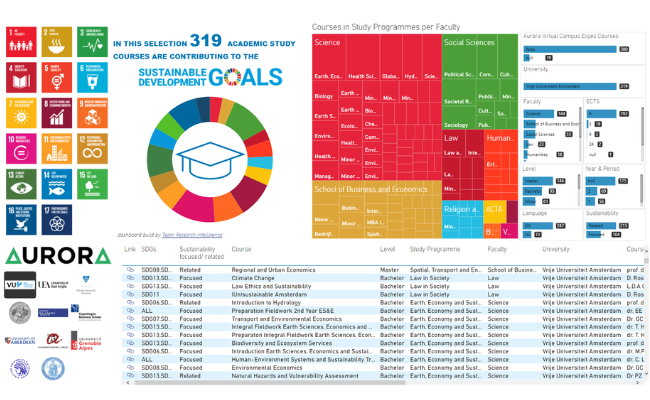
How can you make the impact of the university on the SDGs visible? In collaboration with the Aurora Alliance, VU has developed an SDG research dashboard that demonstrates the societal relevance and societal impact of research. This dashboard shows the research contributions to these societal challenges, and how policymakers have used the research available to tackle these challenges.
Additionally, VU has also developed an SDG inventory of VU courses. There, students can see what SDG courses the university has to offer. During the session, we will present how the development of the dashboard was approached and what the next steps are.
Session organisers
- Ivar Maas, Vrije Universiteit Amsterdam
- Neele van den Bongardt, Vrije Universiteit Amsterdam
Slides
Neele van den Bongardt & Ivar Maas
Relevant Links
RESEARCH
SDG Label Suggestion Tool for research
With combined method of Elsevier SDG queries 2021 and Aurora SDG AI, as well as both methods separately
Survey data validation process
You can download the survey data at this link
Information about improvement process
Go To SDG text analysis dashboard
Aurora Working Group: WP5.1 | Deliverables | SDG Research Dashboard
All data
All data to improve the queries, survey data, text analysis data and queries can be found for free on Zenodo
Evaluation on accuracy of mapping science to the United Nations' Sustainable Development Goals (SDGs) of the Aurora SDG queries
By Schmidt, Felix; Vanderfeesten, Maurice
Whitepaper Societal Relevant Impact : Potential analysis for Aurora-Network university leaders to strengthen collaboration on societal challenges
By Maurice Vanderfeesten; René Otten
EDUCATION
If you would like to stay in touch on this, please send us an email: [email protected]
Session recording
Other sessions
Radical Reforms for the Campus of the Future
How to Report the Transformation in Higher Education for Global Sustainability
Embedding Climate Change Education within HEIs

Radical Reforms for the Campus of the Future
Session 2. Radical Reforms for the Campus of the Future
Wednesday, June 8th, 11:00 – 12:30 Hong Kong Time (UTC+8)
Description
A net-zero campus in 2050 probably does not resemble our campuses of today. In fact, some suggest that even four-year undergraduate degrees may soon be obsolete as the emphasis shifts to life-long learning models and personalized student training. This means that the combination of net-zero pressures and the restructuring of teaching and learning models will fundamentally transform campuses that are ready (and punish those that are not). In this session, we will anticipate radical changes we might see in the coming decades and explore ways to get ahead of the curve for a soft (and sustainable) landing.
Session organiser
- Davis Bookhart, Director, Sustainability/Net-Zero Office, Hong Kong University of Science and Technology
Presenters
- Gray Kochhar-Lindgren, Professor, and Director of the Common Core, University of Hong Kong
- John Alejandro Dunn Insúa, Professor and Deputy Director of the CADI Editorial Project, College of Architecture and Interior Design (CADI), Universidad San Francisco de Quito
- David Galipeau, Founding Partner SDGx.io, Director, SDGx Near Future Lab
Relevant Links
Sustainable Smart Campus as a Living Lab
Sustainability Net-Zero Office
Session recording
Other sessions
Visualizing Societal Impact: Research and Education Dashboards of the Sustainable Development Goals
How to Report the Transformation in Higher Education for Global Sustainability
Embedding Climate Change Education within HEIs

Sustainability in Higher Education: An Agenda for Transformational Change: A Manifesto for Change and ‘Third-way’ People
Session 1. Sustainability in Higher Education: An Agenda for Transformational Change: A Manifesto for Change and ‘Third-way’ People
Tuesday, June 7th, 9:00 – 10:30 Eastern Daylight Time (UTC-4)
Description
Higher education (HE) is essential for the transformative change of sustainable development (SD). Adopted as a driver of change within HE institutions (HEIs) and/or realized beyond their walls, HEIs are on a sustainability journey – some are just setting out, while others are further along – no one institution has yet arrived.
Sustainability-led transformation may take place at the level of the institution, organization, culture, place (anchor), and/or students. Different local and national contexts, institutional archetypes, and academic missions influence the pursuit of SD in and by HEIs. But HEIs must change – what they do, how they do it, and with whom. Relatively incremental and small-scale projects will not deliver on the new ways demanded by the challenges of the Anthropocene – certainly not fast enough. We need to ‘power-up’ to realize fully the transformational potential of HE as a route for SD.
A manifesto for change in HE[1] relies on new leadership and governance models and ‘third-way’ professionals, i.e., those able to traverse academic and professional domains to advance pan-HEI projects. The session will explore a 10-point manifesto for change in the context of articulating definitions of ‘boundary spanning people, able to navigate the inherent tensions of bounded discipline-based scholarly communities, professional domain groupings, and students from all fields to advance sustainability projects that are multi-faceted, unbounded and emergent.
[1] Purcell, W. M. & Haddock-Fraser, J. (2023). Handbook of Sustainability in Higher Education: An Agenda for Transformational Change. Bloomsbury Press.
Session organiser
- Dr. Wendy Purcell, Harvard University
Presenters
- Julie Newman, Director of Sustainability, MIT
- Julio Lumbreras, Professor, Technical University of Madrid (UPM)
- Dave Gorman, Director of Social Responsibility and Sustainability, The University of Edinburgh
- Shana Weber, Director, Office of Sustainability and Lecturer, High Meadows Environmental Institute at Princeton University
Slides
Wendy Purcell
Julie Newman and Shana Weber
Julio Lumbreras
Relevant Links
Handbook on Sustainability in Higher Education: An Agenda for Transformational Change
Session recording
Other sessions
Radical Reforms for the Campus of the Future
Visualizing Societal Impact: Research and Education Dashboards of the Sustainable Development Goals
How to Report the Transformation in Higher Education for Global Sustainability
Embedding Climate Change Education within HEIs
University of Genoa approves Climate Neutrality Strategy and updates ISCN membership
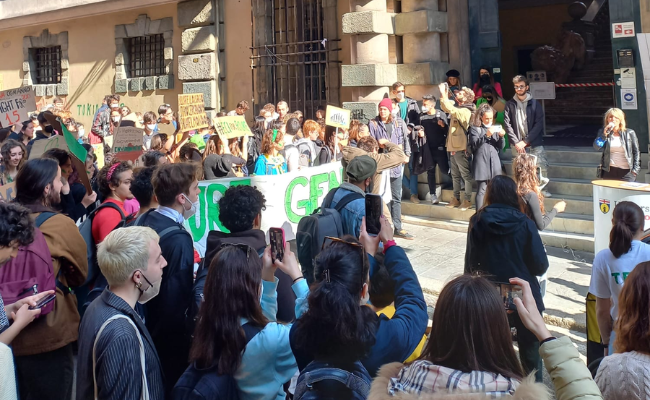
On January 27, 2022 the University of Genoa (UniGe) made a strong and explicit pledge against climate change, defining its Climate Neutrality Strategy 2022-2030. The strategy, starting from the latest UniGe greenhouse gas (GHG) inventory, outlines a path that the university has to follow to reduce both the direct and indirect emissions of pollutants in the atmosphere. Moreover, the document defines the actions to do for the neutralization or compensation of residual emissions. This is the last step of the strong and continuous commitment towards the spreading of the Sustainability culture in all the activities of the University of Genoa. The 2021-2026 UniGe Strategic Plan also identifies sustainability as one of the five strategic development lines together with digitization and innovation, inclusion, internationalization, and quality.
In 2011, UniGe started its sustainability commitment by focusing the research and projects of the Savona Campus on Sustainable Energy and Smart City. Great efforts were made to reduce the carbon footprint of the Campus by the creation of two big Research Infrastructures (a Smart Microgrid and an energy self-sufficient building) integrating different renewable energy sources and system automation. For those reasons, in November 2016 the Savona Campus joined ISCN sharing its best practices with other international universities. In the meantime, the UniGe Commission on Environmental Sustainability was created to improve the sustainability culture of the whole university. Several actions and projects have been carried out so far, including participation in Italian and international networks or rankings.
“The University of Genoa has made a lot of efforts to improve its sustainability performances in all its campuses. I think that participation in networks, rankings and conferences stimulates us to consider aspects related to sustainability in a systematic and continuous way, enriching our knowledge. For that reason, I decided to sign the ISCN charter on behalf of the whole University of Genoa.” -- Prorector for Sustainability, Adriana Del Borghi
McGill University releases Sustainable Travel Guide
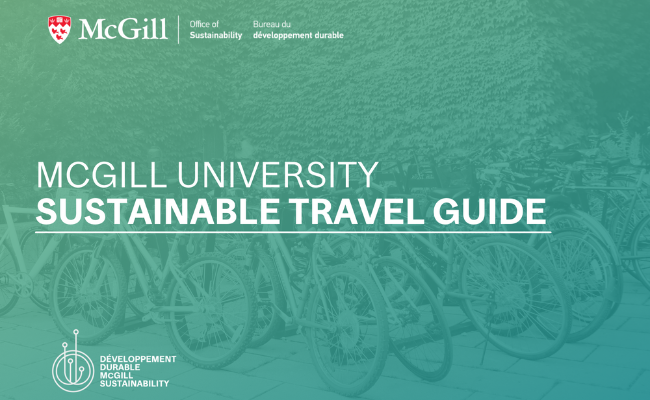
McGill University has released a new Sustainable Travel Guide to provide guidance for McGill travellers—students, staff, and faculty—on how to factor sustainability into travel decisions, from determining whether travel is necessary, to choosing the best mode of transport or reducing impact upon arrival. It was produced by the McGill Office of Sustainability, in Montreal, Canada, with the expertise of its Climate Officer Divya Sharma.
Travelling sustainably means considering present and future environmental, social, and economic impacts of travel. By reducing emissions of business-related travel, McGill community members contribute to the University’s long-term target to achieve carbon neutrality (net zero emissions) by 2040.
The Sustainable Travel Guide, designed as a checklist, guides readers through four questions that push them to think about how they choose to travel:
- Do I need to travel?
- Can I travel sustainably?
- Can I choose sustainable accommodations?
- Can I reduce my environmental impact further?
Throughout, the guide presents various options depending on the traveller’s needs, whether they are travelling locally or internationally, if they are able to bundle trips or reduce the number of travellers, and more.
Learn more at mcgill.ca/sustainability

Peer Exchange Event Report Back
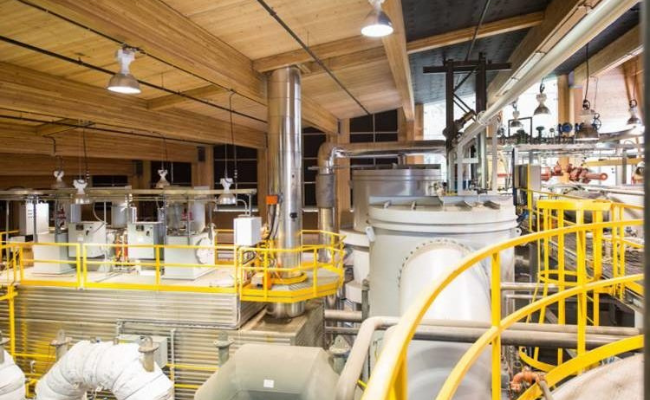
We held our first ISCN members-only Peer Exchange in March to learn about UBC’s new Climate Action Plan 2030.
Thank you to John Madden, Director, Sustainability and Engineering, Campus and Community Planning from The University of British Columbia and Katrin Schweigel, Coordinator University Alliance for Sustainability, Freie Universität Berlin who led an interactive discussion with attendees.
The session provided an opportunity to engage in open dialogue with other members about climate action planning and was attended by representatives from 15 member institutions in 12 countries on 4 continents.
We plan to host regular member-only Peer Exchanges throughout the year, so if you are interested in convening a session please email your ideas to [email protected].
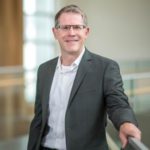 “I really enjoyed the discussion and hope that folks were able to gain some insights and ideas for the work they are doing. I always enjoy hearing what others are working on and finding ways to accelerate solutions based on mutual learning”.
John Madden, Director of Sustainability and Engineering, UBC
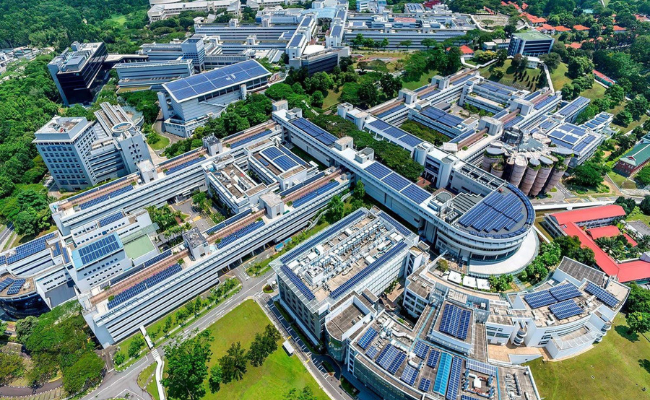
NTU opens sustainability office
Nanyang Technological University (NTU) in Singapore has opened a new Sustainability Office to coordinate and drive NTU’s sustainability efforts in a holistic and integrated way. To build on this momentum, the University has also released a 15-year Sustainability Manifesto. The Manifesto reflects NTU’s commitment to decarbonisation and sustainable development and will guide the University towards their goal of carbon neutrality by 2035.
The NTU Sustainability Manifesto recognises that sustainability is a grand and complex global challenge involving all sectors and all of society. To that end, in addition to striving for carbon neutrality, the University aims to:
- Incorporate sustainability in its newly established interdisciplinary common core curriculum for all undergraduate students;
- Launch new undergraduate, postgraduate and continuing education programme options on different aspects of sustainability;
- Support and promote the principles of the United Nations Sustainable Development Goals across the pillars of education, research, innovation and community;
- Achieve 100% Green Mark Platinum certification for all eligible buildings on the main NTU campus; and
- Reduce by 50 per cent NTU’s net energy utilisation, water usage, and waste generation, by March 2026, compared to the baseline levels of 2011.
Learn more about NTU's sustainability work.
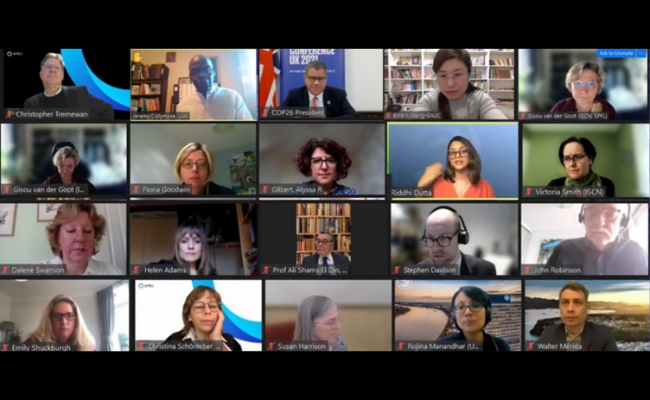
COP26 President convenes higher education sustainability and climate network leaders
On February 21, 2022, COP26 President Alok Sharma, in partnership with the UK COP26 Universities Network and the International Sustainable Campus Network, brought together leading global climate and sustainability networks to explore opportunities for collective impact in the run-up to COP27.
President Alok Sharma focused on the critical role that universities play in advancing climate action and emphasised that universities need to work together in order to maximise their climate impact. The session called on higher education institutions to unite under a collective vision to drive the Glasgow commitments forward and keep momentum going toward COP27.
ISCN Board President, Gisou van der Goot and ISCN Executive Director, Victoria Smith attended the meeting and will continue working with global network colleagues to plan for a coordinated presence at COP27.
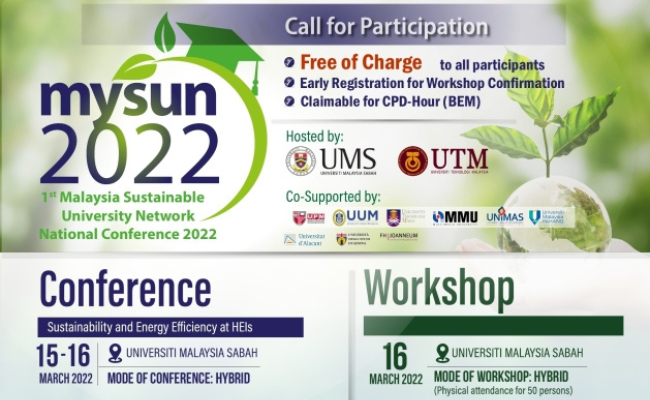
1st Malaysia Sustainable Network National [Hybrid] Conference
The University of Genoa is committed to promote sustainable development in its campuses and among the local territory through various initiatives. In particular, the Savona Campus collaborates with some Malaysian universities to promote sustainability and energy efficiency in Malaysian university campuses, within the Erasmus+ CBHE funded project named MYSUN. This network of MY universities has organized the Free of Charge 1st Malaysia Sustainable Network National Conference, to be held on March 15, 16 2022. The event will be conducted in a Hybrid mode: online via a videoconferencing platform and at Universiti Malaysia Sabah.
The conference will be accompanied by a series of workshops on campus sustainability-related topics, especially devoted to Higher Education Institutions (HEIs), and will provide opportunities to exchange ideas and research experiences, as well as to establish research collaborations with global partners.
You can find more info and the registration link on https://www.mysuncampus.eu/en/conferences/1st-malaysia-sustainable-university-network-national-conference
@MYSUNcampus
#sustainablecampus #MYSUNcampus #ErasmusPlus #mysun2022
Updates about the conference and the MYSUN project:
Facebook: https://www.facebook.com/mysuncampus
Instagram: https://www.instagram.com/mysuncampus/
Twitter: https://twitter.com/mysuncampus/