
New Global Declaration Positions Universities as Living Labs for Climate Action
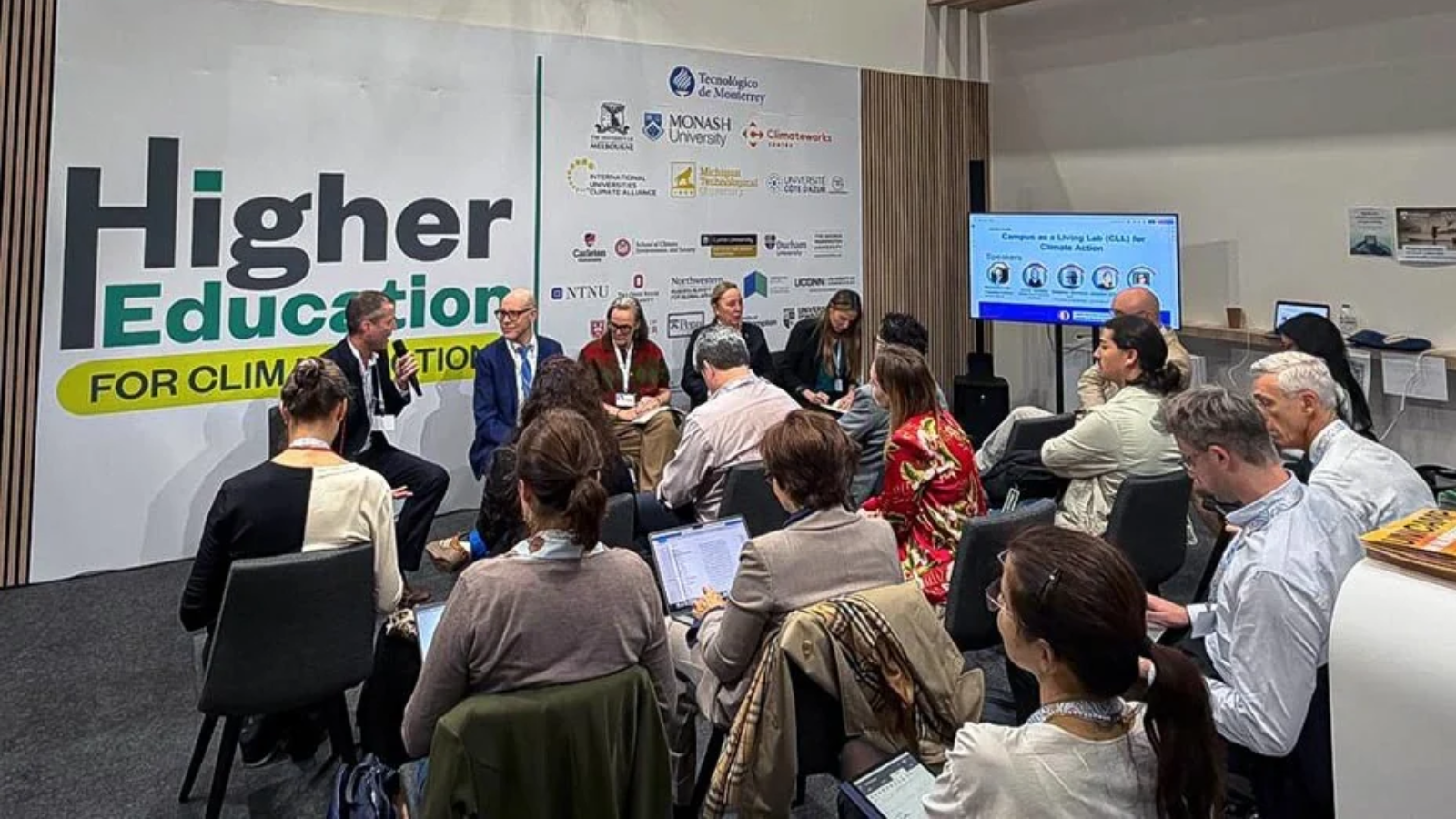
Launched at the COP31 Higher Education for Climate Action Pavilion in Antalya, Türkiye, a new global declaration calls on universities to harness their campuses and surrounding communities as living laboratories for climate action, turning research, education, and innovation into practical solutions while empowering people to drive change.
The Declaration for Universities as Living Labs for Climate Action: From Campus Action to Climate Empowerment brings together more than a dozen higher education networks and alliances from around the world, including the International Sustainable Campus Network (ISCN), under the coordination of the Higher Education Climate Network of Networks (NoN) and Middle East Technical University (METU).
At its heart, the Declaration recognises the unique role universities can play in advancing climate action by using their campuses as real-world environments to research, test, demonstrate, and scale solutions. Through their teaching, research, campus operations, institutional leadership, and partnerships, universities can embed climate action across all aspects of campus life. This creates opportunities for experiential learning and empowers students, faculty, staff, and surrounding communities to take meaningful action. Everyday university activities can then become drivers of tangible climate solutions and broader societal impact.
Importantly, the Declaration also emphasises Action for Climate Empowerment (ACE), recognising that meaningful climate action requires more than scientific knowledge. It calls for stronger climate education, public engagement, and international cooperation, with students and young people actively involved as partners in shaping solutions.
The Declaration invites universities and higher education networks to:
- Develop institutional and network strategies to advance living labs for climate action.
- Integrate climate action across education, research, innovation, and campus operations.
- Engage students and young people as active partners in climate action.
- Build inclusive, socially responsive approaches that recognise the different impacts of climate change on communities.
- Connect climate action with biodiversity, ecosystem resilience, and sustainable development.
- Strengthen partnerships with communities, governments, schools, civil society, and businesses.
- Share knowledge, evidence, and successful practices nationally and internationally.

Recognising that universities operate in different contexts and have varying capacities, the Declaration calls for a flexible, evidence-based implementation roadmap to guide progress. To support this, accompanying the Declaration is the Campus as a Living Lab for Climate Action Roadmap, which outlines a pathway for taking this work beyond COP31. Led by NoN, METU, and Race to Zero for Universities and Colleges (RtZ U&C, convened by EAUC), the Roadmap identifies five priorities to help universities move beyond simply studying climate change and become active environments for demonstrating, developing, and scaling solutions that contribute to climate action and wider societal transformation:
- Embedding Living Labs as a core institutional approach.
- Accelerating the delivery of climate commitments and action.
- Strengthening engagement, partnerships, and entrepreneurial capacity.
- Advancing climate research and innovation.
- Empowering climate citizens through experiential learning.
The Roadmap will be further developed through consultation and collaboration with universities and partners, with the aim of strengthening common approaches, sharing best practices, and supporting the wider adoption of campus living labs.
Stephen Davison, Executive Director of Cambridge Zero and Coordinator of NoN, emphasises, “The Declaration represents a step in that direction, but the greatest work begins now: building the conditions for more institutions to move forward together.”
As a signatory and strategic partner, ISCN is pleased to contribute to this collective effort. By working together across institutions and networks, universities can extend their influence beyond campus boundaries, accelerate the development and sharing of climate solutions, and empower their communities to contribute to a more sustainable and climate-resilient future.