
ISCN Latin American Chapter Announces New Leadership Structure
Building on the recent successes of the ISCN Latin American Chapter at COP16 and COP30, we are pleased to announce an important update in the Chapter’s leadership structure. The Chapter was a key outcome of the 2019 ISCN Conference hosted by Universidade de São Paulo, in Brazil. The conversation centered on the need to provide a regional forum to discuss common national, Latin American, and global sustainability challenges and opportunities while seeking ways to leverage the collective knowledge of ISCN members internationally.
With this important context in mind, we are very grateful that the Universidade de São Paulo will assume the Presidency and Secretariat of the Chapter, with Tecnológico de Monterrey co-leading in the Vice Presidency role in 2026. This new leadership arrangement reflects the continued strengthening of collaboration across the region and builds on the strong engagement and visibility the Chapter has achieved in recent international climate forums.
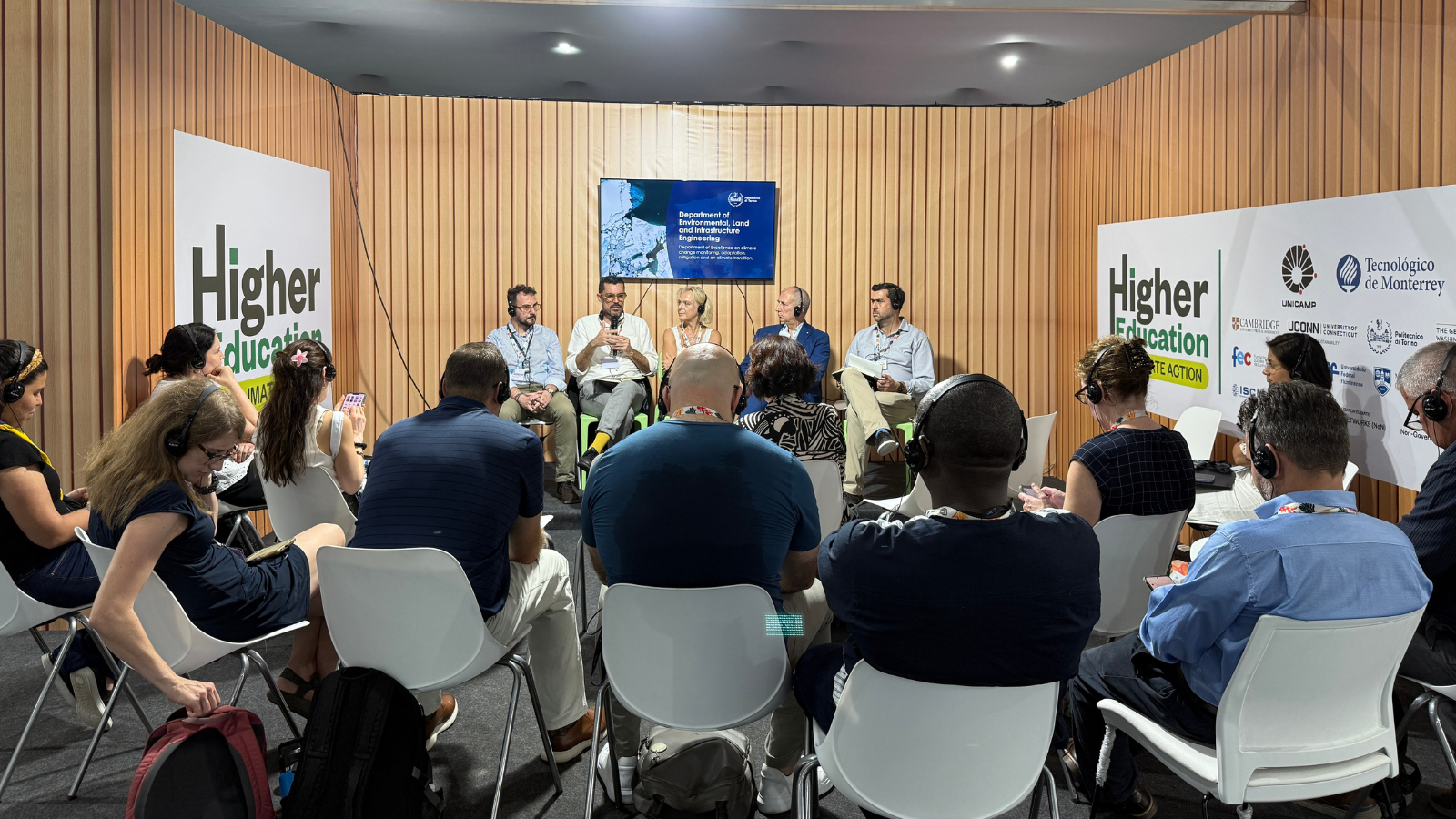
The ISCN LATAM Chapter has played an active role in advancing ISCN’s engagement on the global stage. At COP16, the Chapter hosted a pre-event webinar series bringing together university leaders and sustainability practitioners to explore emerging priorities for higher education in biodiversity. The development of the Cali Charter from Universities for Nature, led by ISCN Senior Fellow, Emilio Latorre, calls for actionable steps to address environmental challenges, and for universities to integrate biodiversity and sustainability more systematically into their operations, governance, and community engagement. At COP30, the Chapter further strengthened its presence by co-hosting the Higher Education for Climate Action Pavilion in the Blue Zone. The Pavilion served as a dedicated convening space for universities, networks, and partners to exchange knowledge, showcase initiatives, and elevate the role of higher education in accelerating climate solutions and driving systems-level change.
With Universidade de São Paulo and Tecnológico de Monterrey taking on these leadership roles, the Chapter is well positioned to further strengthen coordination among member institutions, expand outreach, and deepen collaboration on shared priorities in sustainable campus development and climate action. Their combined leadership brings strong academic expertise and regional reach, supporting a more connected and impactful network.
We are confident that this new phase of leadership will help build on the strong momentum established to date and further enhance the visibility and effectiveness of the ISCN LATAM Chapter.