
A Milestone for Collaboration: The Higher Education for Climate Action Pavilion at COP30
As the world convened in Belém for the 30th Conference of the Parties (COP30) to the United Nations Framework Convention on Climate Change (UNFCCC), the spotlight was not only on global climate negotiations but also on the transformative role of higher education in shaping climate solutions. The International Sustainable Campus Network (ISCN) served as one of the core organizers of the Higher Education for Climate Action Pavilion, a collaborative initiative highlighting the role of higher education in global climate action.
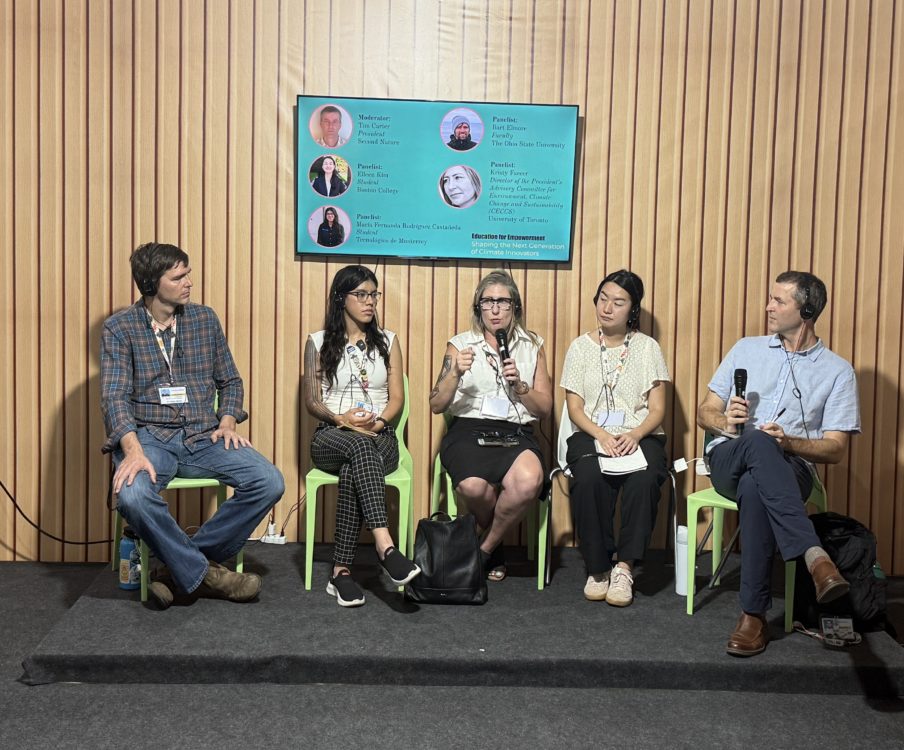
Developed through close collaboration among ISCN Latin American Chapter members, the Research and Independent Non-Governmental Organizations (RINGO) Constituency to the UNFCCC, the Higher Education Climate Network of Networks, and a coalition of global partners, the Pavilion was designed to elevate the critical contributions of higher education while strengthening representation from institutions—particularly those in Latin America and the Global South.
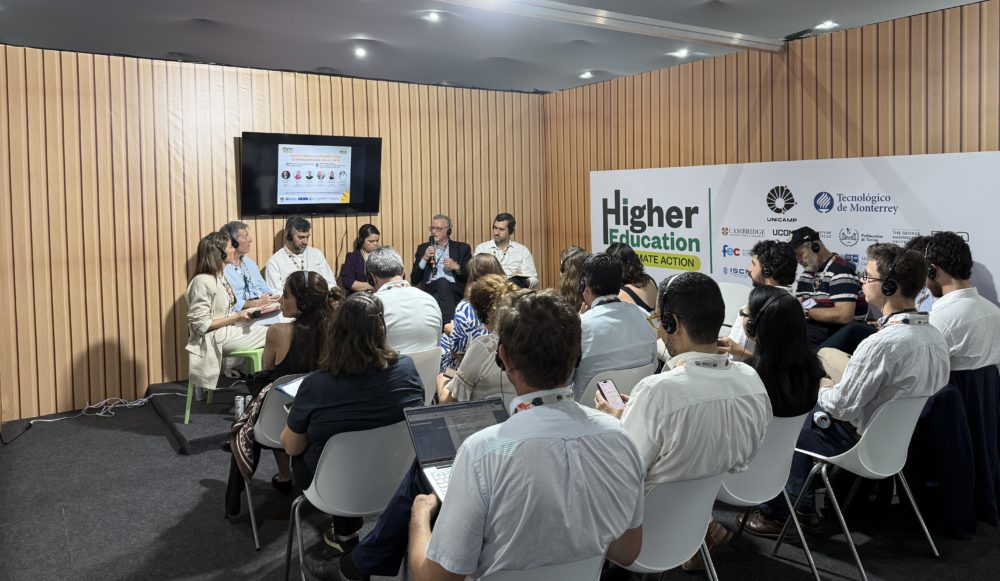
Across two weeks, the Pavilion became a dynamic hub for interdisciplinary dialogue, bringing together universities, researchers, and practitioners to showcase climate innovation, share lessons from campus-based action, and advance the role of higher education institutions as drivers of transformative change. Cross-regional sessions, collaborative workshops, and solution-focused discussions highlighted the increasing importance of academic networks working collectively to meet the accelerating demands of climate mitigation, adaptation, and climate communication. The impact of this joint effort extends beyond COP30, strengthening alliances and setting a new precedent for coordinated higher-education engagement on the international stage.
We extend our sincere appreciation to the Pavilion’s key sponsors and organizing partners, whose leadership and commitment made this initiative possible. In particular, we acknowledge the essential contributions of our colleagues at Universidade Estadual de Campinas (Unicamp) and Tecnológico de Monterrey, whose dedication and coordination were instrumental in shaping and championing the Pavilion. Their partnership and support were integral to the success of this effort.
The reflections shared by Paola Visconti, Director of Sustainability and Social Impact, and Valeria Soto, Lead of Sustainability and Climate Action Projects at Tecnológico de Monterrey, capture the collective spirit and impact of this milestone initiative:
"For us at Tecnológico de Monterrey, the Higher Education for Climate Action Pavilion was one of the most inspiring outcomes of COP30, as it stood out as an example of what collective effort can achieve. Over ten days in Belém, Brazil, the Pavilion served as a dedicated global space to showcase the essential role universities play in driving climate action and sustainable development, while intentionally amplifying the voices and leadership of Latin American institutions.
This initiative was only possible thanks to a remarkable collaborative effort: 16 sponsors came together to support the space, 58 events were delivered, and more than 50 universities from around the world contributed their knowledge, innovations, and commitment. The Pavilion demonstrated not just the power of higher education, but the power of networks working together toward a shared climate agenda.
We want to give a special recognition to the teams that worked throughout 2025 to make this project possible: Roberto Donato, Thalita Dalbelo, Patricia Nunes and Thyago Lins from University of Campinas (Unicamp), Robert Orttung from George Washington University, Victoria Smith and Pato Gonzalez-Marquez from the International Sustainable Campus Network (ISCN), Stephen Davison and Kristy Faccer from the Higher Education Climate Network of Networks, and Beth Martin from the Research and Independent Non-Governmental Organizations (RINGO) Constituency to the UNFCCC."
Looking ahead, ISCN remains committed to strengthening collaboration across global higher education networks and ensuring that universities continue to play an influential and solutions-driven role within the UNFCCC process. The success of the Pavilion at COP30 demonstrates what is possible when institutions work collectively toward shared goals, and it provides a strong foundation for continued joint action in the lead-up to COP31 and beyond.
Pavilion Sponsors
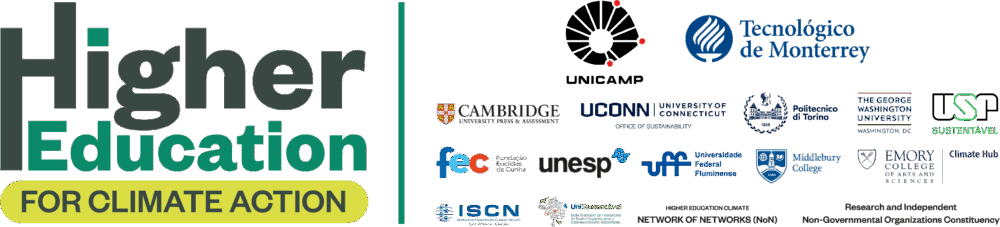
The Pavilion was possible due to the collaboration and support of:
Universidade Estadual de Campinas (Unicamp)
Tecnológico de Monterrey
Cambridge University Press and Assessment
University of Connecticut
Politecnico di Torino
The George Washington University
Universidade de São Paulo
Fundação Euclides da Cunha
Universidade Estadual Paulista
Universidade Federal Fluminense
Middlebury College
Emory University
International Sustainable Campus Network Latin American Chapter (ISCN-LATAM)
Rede Brasileira de Instituições de Ensino Superior para o Desenvolvimento Sustentável (UniSustentável)
The Higher Education Climate Network of Networks (NoN)
Research and Independent Non-Governmental Organizations (RINGO) Constituency to the UN Framework Convention on Climate Change (UNFCCC)

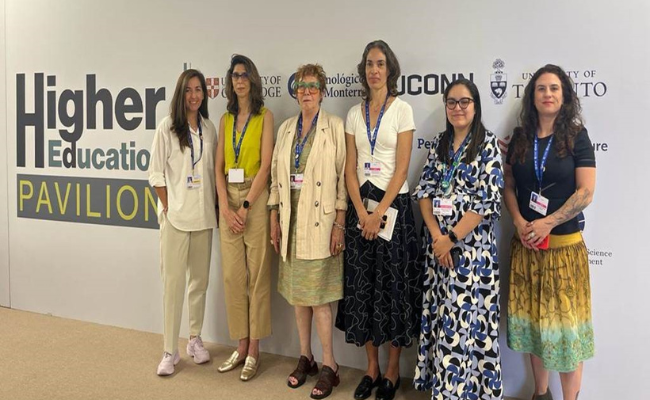
ISCN Members at COP28
At this year’s COP28, the Higher Education Sector was more visible than ever before. ISCN members participated in and led several events during the Presidency, official side event and pavilion programs. We also convened discussions that offered members and partners a rare opportunity for in-person community building and agenda setting. Two particular highlights from our time in Dubai included a convening of Latin American groups (week 1) and Network of Networks Roundtable (week 2) towards plans for enhanced regional and global collaboration, respectively.
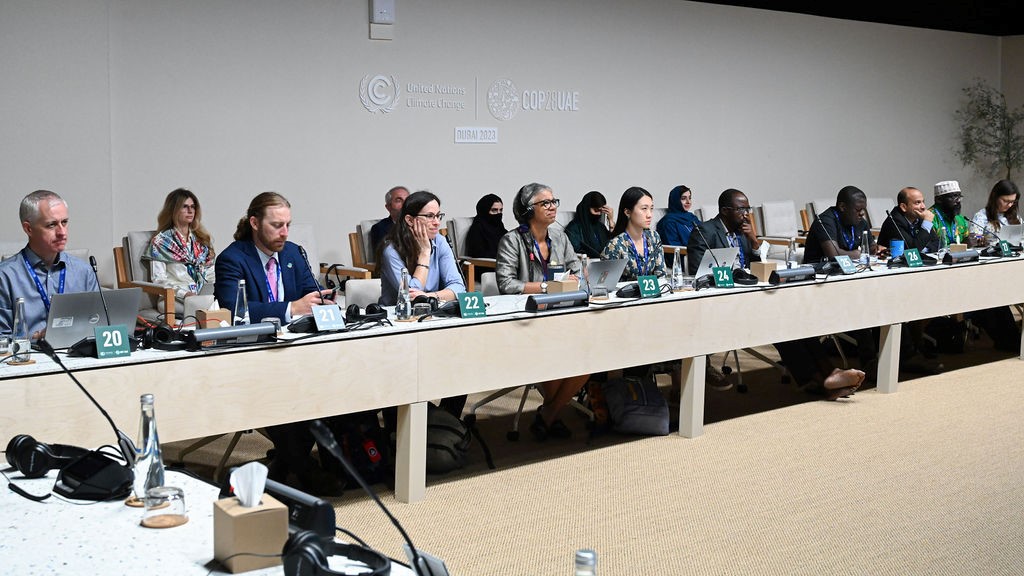
In the first meeting, Paola Visconti, Sustainability Engagement Manager at Tecnológico de Monterrey in Mexico, gathered Latin American Universities present at COP28 to learn how they engage at COPs and how the region can have a more robust presence at COPs, considering the future COP30 in Brazil. Participants at the meeting agreed that the region should unite efforts to enhance participation and unite voices to share experiences, learn from each other, give visibility of the great work already being done by Higher Education in the region and catalyze climate action in Latin America.
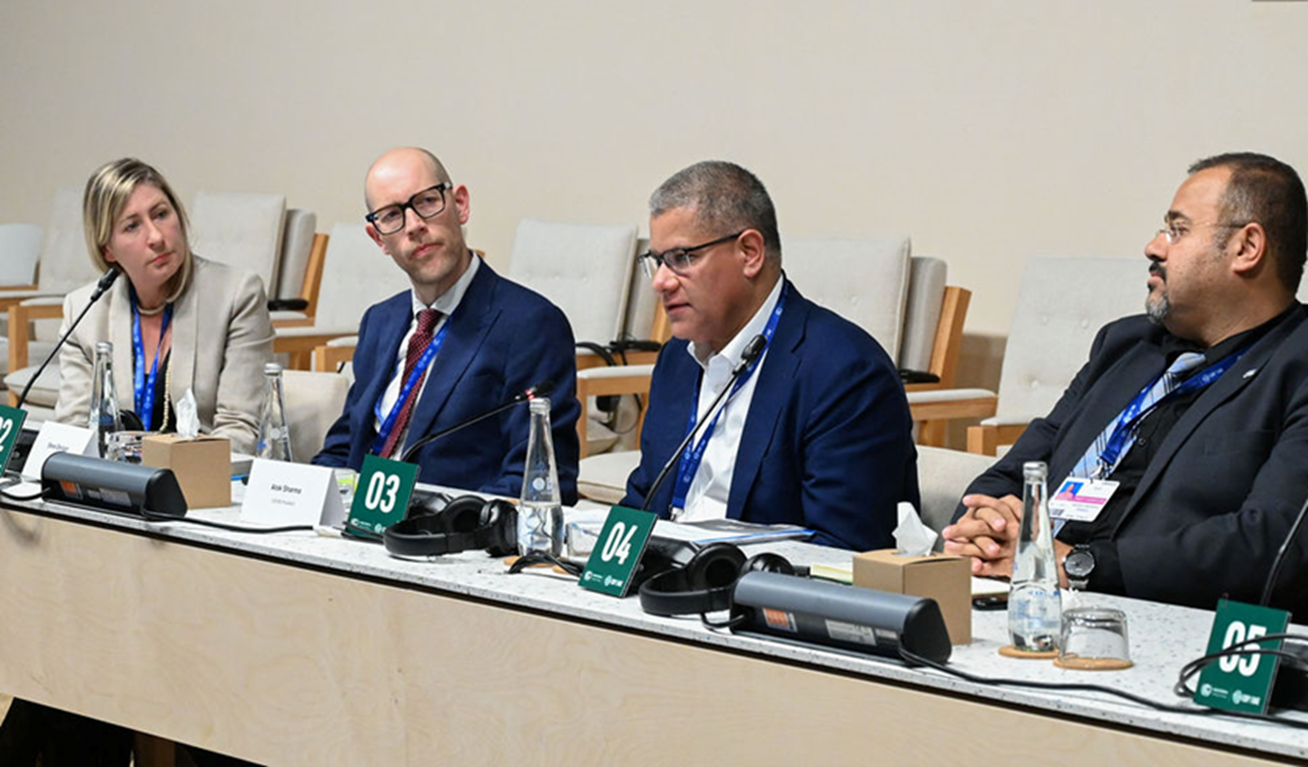
In the second, Kristy Faccer, ISCN Senior Fellow and Director of the President’s Advisory Committee on Environment, Climate Change and Sustainability at the University of Toronto co-convened (with Cambridge University) representatives from more than 20 Higher Education networks and UN partner groups to identify sector-contributions to the High Level Champions and Marrakech Partnership priorities for climate action.

Delegates reached agreement on an overarching vision for higher education, discussed global opportunities and set the foundation for sector-led climate contributions in the coming year and going into COP29 and COP30.
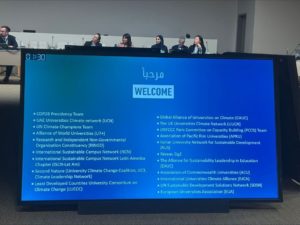


Symposium on Interdisciplinarity for the Net-Zero Transition
Only by joining forces and mobilising all disciplines and parts of the research ecosystem, can we tackle the challenge of the #NetZero Transition.
Register now for the Symposium on Interdisciplinarity for the Net-Zero Transition that ISCN is co-organising with Science Europe, CESAER, the European University Association, UNICA, and Strathclyde University: http://scieur.org/cop27-symposium-registration
🗓️ 3 November
⌚️ 14:00-17:00 Central European Time (UTC+1)
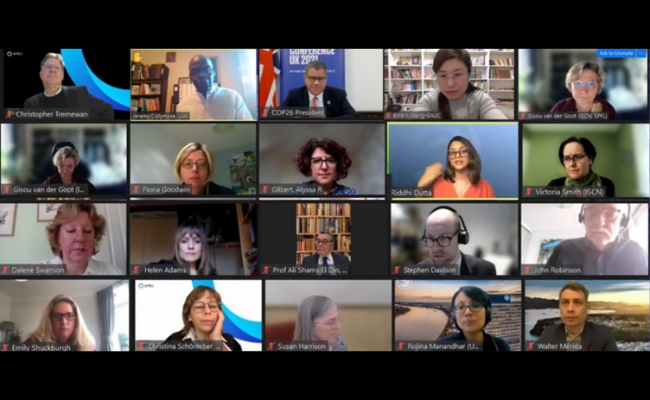
COP26 President convenes higher education sustainability and climate network leaders
On February 21, 2022, COP26 President Alok Sharma, in partnership with the UK COP26 Universities Network and the International Sustainable Campus Network, brought together leading global climate and sustainability networks to explore opportunities for collective impact in the run-up to COP27.
President Alok Sharma focused on the critical role that universities play in advancing climate action and emphasised that universities need to work together in order to maximise their climate impact. The session called on higher education institutions to unite under a collective vision to drive the Glasgow commitments forward and keep momentum going toward COP27.
ISCN Board President, Gisou van der Goot and ISCN Executive Director, Victoria Smith attended the meeting and will continue working with global network colleagues to plan for a coordinated presence at COP27.

ISCN at COP26: Science for Net-Zero Transition meeting report
The United Kingdom (UK) hosted the twenty-sixth United Nations (UN) Climate Change Conference of the Parties (COP26) at the Scottish Event Campus (SEC) in Glasgow from 1 to 12 November 2021. The climate talks brought together over 30,000 delegates, including heads of state, climate experts and campaigners to agree coordinated action to tackle climate change.
ISCN with CESAER, Science Europe and the University of Strathclyde joined forces to co-organise a symposium in the fringe of COP 26 which brought together universities, national research performing organisations and research funding organisations to look at how we collectively upgrade our ambitions, and how we can work together with non-academic partners shaping knowledgeable societies for a sustainable future.
The event was a great success with 100 participants connected from 35 different countries around the world.
You can find the recordings by following the links below:
- Science for Net-Zero Transition: Session 1 - YouTube
- Science for Net Zero Transition: Session 2 - YouTube
- Science for Net Zero Transition: Session 3 - YouTube
The four partners have now jointly-released a report to reiterate their engagement to the Call to Action and their commitment to continue their cooperation, leading a session on ‘Engaging Researchers for the Net-Zero Transition’ on 15 July at the EuroScience Open Forum (ESOF 2022) and reconvening at COP27 in November 2022.
ISCN, CESAER, Science Europe and the University of Strathclyde team up to organise Symposium at COP 26
The International Sustainable Campus Network (ISCN), CESAER, Science Europe and the University of Strathclyde have joined forces to co-organise a symposium in the fringe of COP 26 in order to to address questions about how We, universities, research funding and performing organisations, can nurture researchers, teachers, students, support staff and leaders to deal with the breadth and complexity of the net-zero transition.
Realising the net-zero transition concerns an enormously complex challenge requiring collaboration across all disciplines, communities, institutions and involving societies across the globe. We aim to discuss how to transform our institutional practices, and build alliances with other actors, globally and locally.
The symposium will bring together universities, national research performing organisations and research funding organisations to look at how we collectively upgrade our ambitions, and how we can work together with non-academic partners shaping knowledgeable societies for a sustainable future.
More information can be found on the CESAER website: Science for Net Zero at COP26
