
Politecnico di Milano Approves New Climate Change Adaptation Plan
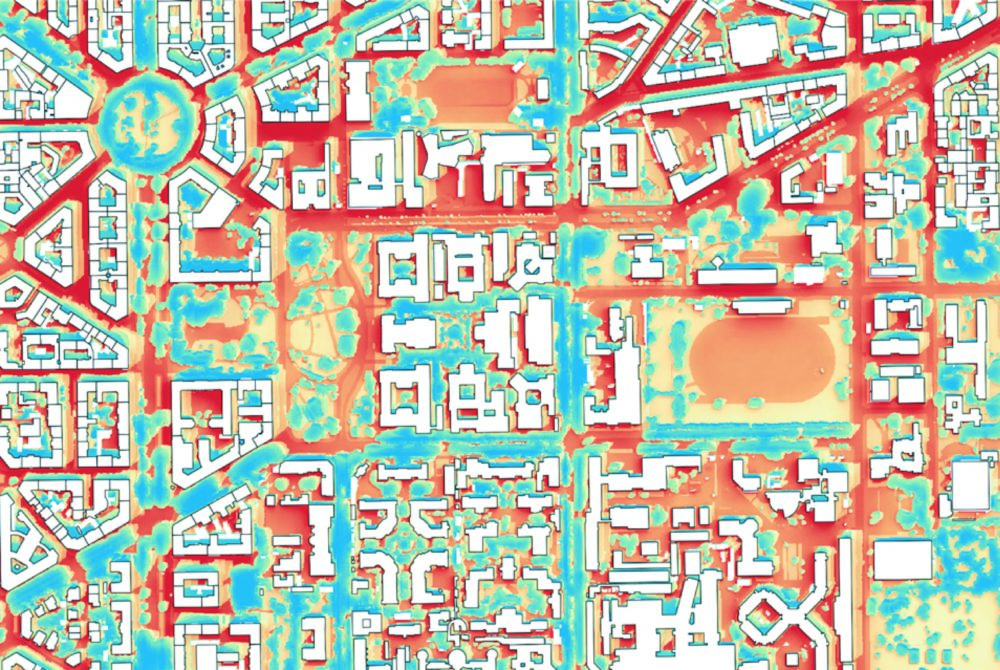
In January 2026, the governing bodies of Politecnico di Milano (Polimi) approved the university’s Climate Change Adaptation Plan (CCAP), marking an important milestone in strengthening campus resilience to the impacts of climate change. As one of the first climate adaptation plans adopted by an Italian university, it represents a significant step forward for both the institution and the wider higher education sector in Italy.
Climate change is an increasingly urgent challenge for universities, whose infrastructure, communities, and environmental assets are increasingly exposed to heatwaves, flooding, droughts, and other extreme weather events. These risks are already affecting campus life and are expected to have growing implications for safety, spatial quality, and the well-being of academic communities in the years ahead. In response, universities around the world are adopting adaptation strategies to protect infrastructure, enhance open spaces, retrofit buildings, and equip their communities with new skills and knowledge.
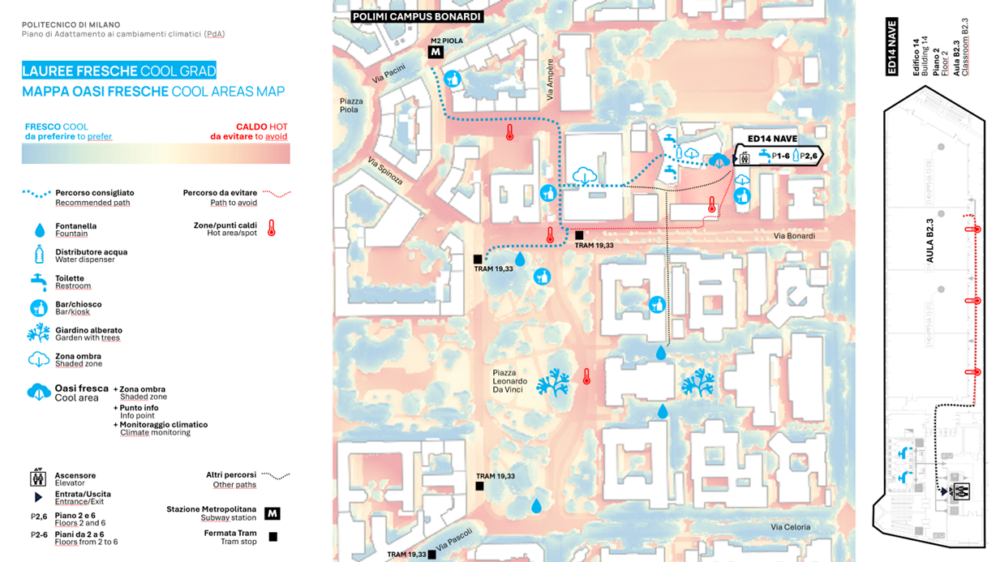
Polimi’s CCAP builds on the university’s broader sustainability agenda, aligned with its 2023–2025 Strategic Plan and Sustainability Strategic Plan. It complements the existing CO₂ Emissions Mitigation Plan by addressing the impacts of climate change: while mitigation focuses on reducing the causes of climate change, adaptation addresses the impacts already being experienced and those expected in the coming decades.
The plan is structured around three main objectives:
- Strengthening knowledge of climate risks and their impacts on people, buildings, infrastructure, and campus ecosystems;
- Enhancing the resilience of university spaces and communities through management solutions, physical interventions, and behavioural change;
- Promoting a culture of climate adaptation by advancing the university as a Living Lab for research, experimentation, awareness, and shared innovation.
In its first year, the CCAP established the climatic and regulatory context, carried out a climate risk assessment focused on flooding and heatwaves, and identified 116 potential adaptation actions, including 16 priority measures selected for their urgency and feasibility.
The focus now shifts to implementation: translating strategy into projects, actions, and everyday decisions that strengthen campus resilience to heatwaves, flooding, drought, and other climate risks. Universities have a vital role to play—not only in studying climate change, but also in transforming their own campuses into living laboratories for climate action and innovation.
Read Climate Change Adaptation Plan (CCAP) [Italian].
Read Executive Summary [English].