
A Milestone for Collaboration: The Higher Education for Climate Action Pavilion at COP30
As the world convened in Belém for the 30th Conference of the Parties (COP30) to the United Nations Framework Convention on Climate Change (UNFCCC), the spotlight was not only on global climate negotiations but also on the transformative role of higher education in shaping climate solutions. The International Sustainable Campus Network (ISCN) served as one of the core organizers of the Higher Education for Climate Action Pavilion, a collaborative initiative highlighting the role of higher education in global climate action.
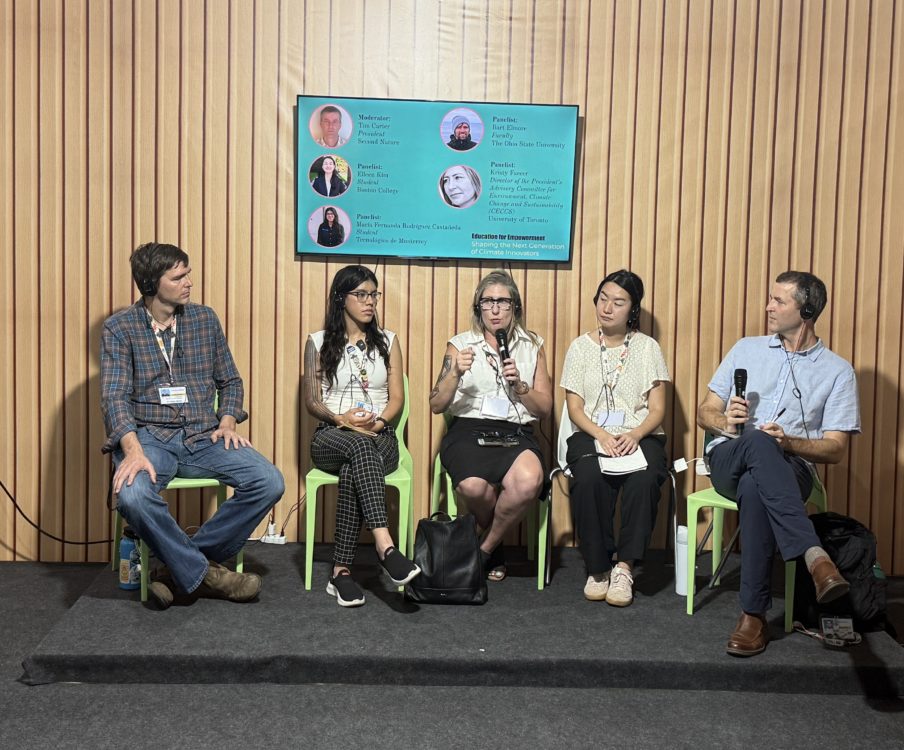
Developed through close collaboration among ISCN Latin American Chapter members, the Research and Independent Non-Governmental Organizations (RINGO) Constituency to the UNFCCC, the Higher Education Climate Network of Networks, and a coalition of global partners, the Pavilion was designed to elevate the critical contributions of higher education while strengthening representation from institutions—particularly those in Latin America and the Global South.
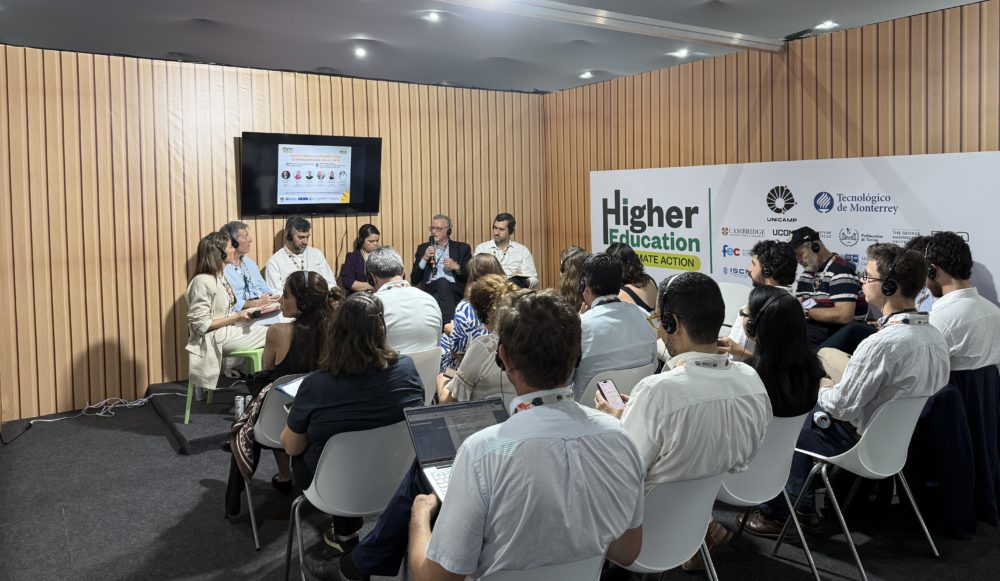
Across two weeks, the Pavilion became a dynamic hub for interdisciplinary dialogue, bringing together universities, researchers, and practitioners to showcase climate innovation, share lessons from campus-based action, and advance the role of higher education institutions as drivers of transformative change. Cross-regional sessions, collaborative workshops, and solution-focused discussions highlighted the increasing importance of academic networks working collectively to meet the accelerating demands of climate mitigation, adaptation, and climate communication. The impact of this joint effort extends beyond COP30, strengthening alliances and setting a new precedent for coordinated higher-education engagement on the international stage.
We extend our sincere appreciation to the Pavilion’s key sponsors and organizing partners, whose leadership and commitment made this initiative possible. In particular, we acknowledge the essential contributions of our colleagues at Universidade Estadual de Campinas (Unicamp) and Tecnológico de Monterrey, whose dedication and coordination were instrumental in shaping and championing the Pavilion. Their partnership and support were integral to the success of this effort.
The reflections shared by Paola Visconti, Director of Sustainability and Social Impact, and Valeria Soto, Lead of Sustainability and Climate Action Projects at Tecnológico de Monterrey, capture the collective spirit and impact of this milestone initiative:
"For us at Tecnológico de Monterrey, the Higher Education for Climate Action Pavilion was one of the most inspiring outcomes of COP30, as it stood out as an example of what collective effort can achieve. Over ten days in Belém, Brazil, the Pavilion served as a dedicated global space to showcase the essential role universities play in driving climate action and sustainable development, while intentionally amplifying the voices and leadership of Latin American institutions.
This initiative was only possible thanks to a remarkable collaborative effort: 16 sponsors came together to support the space, 58 events were delivered, and more than 50 universities from around the world contributed their knowledge, innovations, and commitment. The Pavilion demonstrated not just the power of higher education, but the power of networks working together toward a shared climate agenda.
We want to give a special recognition to the teams that worked throughout 2025 to make this project possible: Roberto Donato, Thalita Dalbelo, Patricia Nunes and Thyago Lins from University of Campinas (Unicamp), Robert Orttung from George Washington University, Victoria Smith and Pato Gonzalez-Marquez from the International Sustainable Campus Network (ISCN), Stephen Davison and Kristy Faccer from the Higher Education Climate Network of Networks, and Beth Martin from the Research and Independent Non-Governmental Organizations (RINGO) Constituency to the UNFCCC."
Looking ahead, ISCN remains committed to strengthening collaboration across global higher education networks and ensuring that universities continue to play an influential and solutions-driven role within the UNFCCC process. The success of the Pavilion at COP30 demonstrates what is possible when institutions work collectively toward shared goals, and it provides a strong foundation for continued joint action in the lead-up to COP31 and beyond.
Pavilion Sponsors
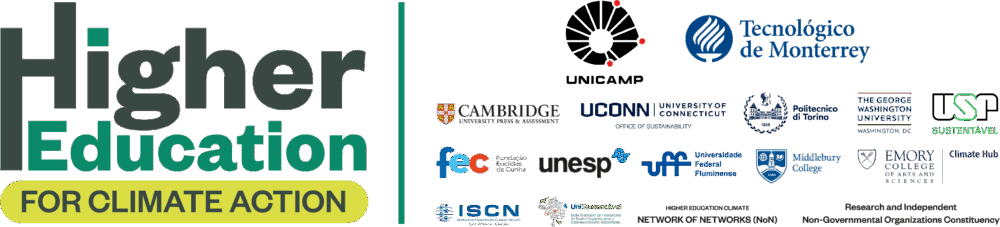
The Pavilion was possible due to the collaboration and support of:
Universidade Estadual de Campinas (Unicamp)
Tecnológico de Monterrey
Cambridge University Press and Assessment
University of Connecticut
Politecnico di Torino
The George Washington University
Universidade de São Paulo
Fundação Euclides da Cunha
Universidade Estadual Paulista
Universidade Federal Fluminense
Middlebury College
Emory University
International Sustainable Campus Network Latin American Chapter (ISCN-LATAM)
Rede Brasileira de Instituições de Ensino Superior para o Desenvolvimento Sustentável (UniSustentável)
The Higher Education Climate Network of Networks (NoN)
Research and Independent Non-Governmental Organizations (RINGO) Constituency to the UN Framework Convention on Climate Change (UNFCCC)
